
Development Finance for NZ Property Projects
Funding for subdivisions, townhouses, multi-unit, and commercial builds. We sit across the bank and non-bank panel and match your project to the lender that actually fits, the one whose pre-sales, equity, and experience policy works for the deal in front of you.
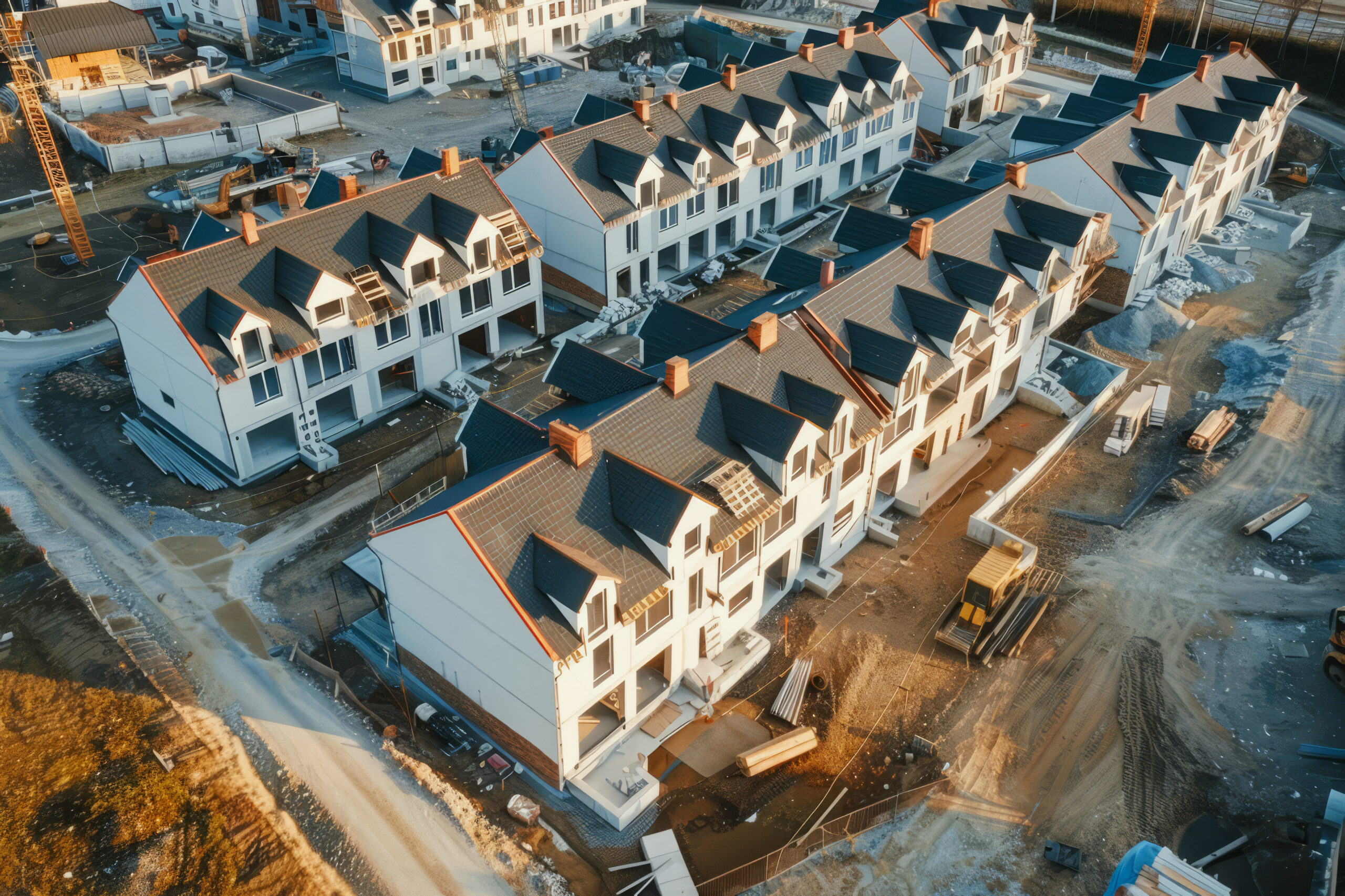
What Is Development Finance in NZ?
Short to medium term project funding to acquire land, fund the build, and cover project costs through to completion. Repaid on sale or refinance, not over a 25 or 30 year mortgage.
A loan structured around the project, not your salary. Funding is interest-only, advanced in stages as the build progresses, and repaid when you sell completed stock or refinance into longer term hold debt.
Different product, different lender, different process
Development finance and a residential construction loan look similar on the surface. The credit assessment is completely different.
- Assessed on:the project, feasibility, and exit strategy
- For:multi-unit, subdivision, commercial, mixed-use
- Term:12 to 36 months, interest-only, staged drawdowns
- Repaid by:sale of completed stock or refinance to hold debt
- Assessed on:your household income and serviceability
- For:a single home for an owner-occupier or investor
- Term:rolls into a 25 or 30 year residential mortgage
- Repaid by:monthly P&I from your salary, long term
Four risks the lender underwrites at once
That's why dev finance sits in a more specialised credit category. Every facility we structure is built around managing all four.
Will it actually get built? Builder, consents, programme, contingency.
Will it sell at the assumed price? Pre-sales, valuation, comparables.
Will it finish on time? QS sign-off, drawdown milestones, extensions.
Will demand still be there at completion? Macro, OCR, buyer borrowing.
Building a single home for yourself? You want our new builds page, not this one. Different product, different lender, different process.
Projects We Help Fund
Development finance covers a wide spread of project types in NZ. Each one has its own lending rhythm: the right facility for a four unit townhouse build is rarely the right facility for a 12 lot subdivision.
Greenfield or infill subdivisions where you're carving land into titled lots for sale. Funding usually covers land acquisition plus civil works (earthworks, services, roading), with the loan repaid as titled lots settle.
Multi-unit residential builds, typically 3 to 10 units on a single site. Common across Auckland, Christchurch, and Hamilton intensification zones. Funding is staged through construction and repaid as units settle.
Larger residential schemes (typically 4+ dwellings up to mid-rise apartments). These deals usually need stronger pre-sales, an experienced sponsor, and a credible builder. Bank appetite is more selective at this scale; specialist non-banks and private capital play a real role.
Standalone commercial, industrial, or mixed-use buildings (retail or office over residential, light-industrial units, etc.). Lease commitments from anchor tenants often play the same role pre-sales play in residential, they de-risk the exit and unlock more leverage.
Who Actually Lends on Development Projects in NZ
The single biggest mistake we see new developers make is assuming "the bank" is going to fund the project. For some deals it will. But a meaningful slice of NZ development is now funded outside the main banks, and getting that wrong costs months.
ANZ, ASB, BNZ, Westpac, and Kiwibank still fund development, but their appetite has narrowed. They prefer experienced sponsors, prime locations, strong equity, and substantial pre-sales locked in before major drawdowns.
The flip side: bank money is the cheapest money in the market. If your project fits, you save real dollars on cost-of-capital.
The non-bank sector is now central to getting NZ developments funded, particularly for projects that don't slot neatly into bank policy.
The non-banks publish far more detail on their criteria than the banks do, and they compete on speed, flexibility, and pre-sale settings rather than price.
A practical way to think about who plays where
Three tiers, three different deal profiles. Most NZ projects will sit clearly in one of them.
- Cheaper money, lower cost of capital
- Stronger projects, experienced sponsors
- More pre-sales, more process
- Faster decisions, more flexibility
- Reduced or zero pre-sale settings
- Strong fit for sub $5m and transitional deals
- Mid to large commercial or mixed-use
- Higher leverage layered structures
- Residual stock, build-to-rent scenarios
What Lenders Assess
Six things drive almost every credit decision on an NZ development. Get these tight before you talk to a lender.
Most NZ development lenders want the developer carrying real skin in the game, usually around 25 to 40% of the capital stack from land, cash, or subordinated capital. Banks typically want stronger equity than non-banks for a comparable project.
Lenders test the loan against a few different metrics, and the terminology varies between lenders.
- LVC (loan-to-cost) or LTC: loan as a percentage of total project cost. Often capped around 60 to 75%.
- LVGR (loan-to-gross-realisation): loan as a percentage of the gross "as if complete" value. Often capped around 60 to 75%.
- LVR (loan-to-value): the ratio you'll see on standard residential mortgages; relevant if you plan to retain completed units as investment stock. (ASB on LVRs)
Most NZ development lenders sit somewhere in the 60 to 75% range on cost or value. Where the deal needs more leverage than that, mezzanine debt is typically used to bridge the gap.
Pre-sales are the clearest dividing line between bank and non-bank dev finance. Banks often want substantial pre-sales locked in before major construction drawdowns, particularly on larger townhouse or apartment schemes. Several non-banks (including ASAP, Cressida under its current offer, and MWM) publicly market reduced or zero pre-sale requirements. For commercial or mixed-use projects, lease commitments from anchor tenants serve a similar function.
Banks are far more comfortable with developers who have completed similar projects before. Non-banks are more open to first-time or emerging developers if the feasibility is strong and the professional team (builder, project manager, consultants) is credible.
Every development facility is repaid, usually through settlement of completed stock or refinance into hold debt. Lenders want a credible exit before they advance a single dollar. "Sell as you go" works for residential subdivisions and townhouse schemes; "refinance to investment loan" works for retained stock, build-to-rent, or commercial assets.
Director guarantees are standard for closely held development entities at SME scale. GST treatment can materially change feasibility and lender metrics: completed value may be assessed inclusive or exclusive of GST depending on the project, and the sale structure affects output tax. Get GST advice early; it's one of the easier ways to lose margin you didn't know you had.
How Development Loans Are Structured
Most projects sit on senior debt only. The bigger and trickier the deal, the more the structure starts to layer up.
The first-ranking mortgage facility funding the bulk of land and build costs. This is the core structure used by banks and first-mortgage non-bank lenders. For most projects, it's the only debt you'll have.
Subordinated debt that sits behind the senior lender. Used to lift total project leverage without increasing developer equity. Mezzanine pricing is materially higher than senior pricing, and it typically requires its own approval, security, and intercreditor arrangements.
A higher-leverage senior facility that bundles senior and mezzanine-style risk into a single lender. Less common in NZ than in Australia, but a growing offer from larger specialist lenders.
Funds are advanced in stages, not in one lump sum. Typical milestones include land settlement, site works, slab and foundations, framing, lock-up, completion stages, and final certification. Each drawdown is linked to progress evidence, usually a quantity surveyor (QS) sign-off on work completed and remaining cost-to-complete. Some specialist lenders relax formal QS requirements on simpler projects, but monitoring remains a core risk-control tool.
NZ development loans usually run 12 to 36 months depending on scale and complexity. ASAP caps the standard term at 12 months with extensions possible; broader market commentary supports longer terms for larger or staged projects.
The Real Cost of Development Finance
Headline rate is one piece of the puzzle. The all-in cost includes finance fees, line fees, and the recurring monitoring spend that runs through the build.
Interest rates
There's a clear pricing gap between banks and non-banks. Bank development funding sits meaningfully below non-bank pricing, but bank pricing is project-specific and rarely published. Current non-bank examples:
Early 2026 market commentary places typical non-bank development pricing at 9.5% and above plus fees, with some lower promotional offers.
Fees and line charges
Headline rate is only part of the cost. Most facilities also carry:
ASAP 2.25 to 3%, Cressida 2%, MWM from 1.5%. Paid up front on settlement.
Cressida publishes 0.25% per month; broader 2026 commentary cites line fees around 1.2% on dev transactions.
Paid by the borrower. Charged at each drawdown milestone for QS sign-off and lender legal.
Cheaper capital is not always the best capital. A bank facility at a lower headline rate can still cost you more in real terms if it delays approval by 6 to 8 weeks, forces 50% pre-sales before drawdown, or gears too low to make the project work. The cheapest deal is the one that actually settles in time for your build programme.
Book a Free ChatHow a Development Finance Deal Runs
A typical NZ development finance application runs through six stages.
Feasibility assessment
Review land cost, build cost, fees, contingencies, programme, projected end value, and exit assumptions.
Lender matching
Decide whether the deal fits a main bank, a specialist non-bank, private capital, or a layered structure.
Application and due diligence
Plans, budgets, build contracts, sponsor and director CVs, consents or consent strategy, registered valuation, and (usually) a QS review.
Approval and legal documentation
Satisfy conditions precedent, finalise security, complete any pre-sale or insurance requirements.
Drawdowns and monitoring
Staged advances against progress claims and updated cost-to-complete, with QS sign-off at each milestone.
Completion and exit
Repay through settlement of completed stock or refinance into hold debt.
Specialist non-banks compete on speed. Indicative approvals are often available in days when information is complete, with first settlement in 2 to 4 weeks. Bank processes are slower, usually 4 to 8 weeks to first settlement, sometimes longer where valuation, QS, legal, and credit-committee timing stack up. Council consent delays can extend either side.
Where We Add Value
Development finance is a specialist credit category, and the right facility for any given project depends on a stack of variables that move month to month. Here's how we help.

We sit across both bank and non-bank panels. We know who's funding right now, at what gearing, with what pre-sale settings.
Senior, mezzanine, stretch senior. We work the structure that gets your project funded at workable leverage.
Plans, budgets, feasibilities, CVs, consents, valuations, QS reports. We package what each lender wants.
Drawdowns, refinance to hold debt, settlement coordination. We don't disappear after the loan settles.
We're paid by the lender on settlement, not by you. That's the same model that funds the rest of our business, and it doesn't change for development deals.
Development Finance FAQs
The questions we hear most from NZ developers.
Yes, but the funding channel often changes. First-time developers are more likely to secure funding through specialist non-bank lenders than through a main bank, especially if the project is small, tightly controlled, and the consultant team is experienced. Bank appetite for first-time sponsors is generally limited unless the project is small and the equity contribution is strong.
There's no single floor. Several active non-bank lenders publish minimum facility sizes around $500,000 to $1 million, which in practice points to small multi-unit, townhouse, or subdivision projects. If you're funding a single owner-occupier home, that's a construction loan, not development finance.
Plan on contributing roughly 25 to 40% of the total project cost from land, cash, or subordinated capital. Banks typically want stronger equity than non-banks; mezzanine debt can reduce the equity required if it suits the deal.
No. Banks usually want substantial pre-sales locked in before major drawdowns, particularly on larger schemes. Several specialist non-banks now publicly market reduced or zero pre-sale requirements, which is one of the main reasons developers choose a non-bank for the right project.
Generally no. The CCCFA applies to consumer credit contracts, and loans entered into wholly or predominantly for business purposes are typically outside the consumer-credit regime. Most property development lending to companies or business borrowers sits outside the CCCFA's affordability framework. Other legal and conduct obligations still apply. From 1 July 2026, responsibility for the CCCFA regime moves to the FMA.
Indirectly. RBNZ LVR restrictions are targeted at residential mortgage lending rather than pure commercial development facilities, but they shape the environment your deal exits into. They affect purchaser borrowing power, bank risk appetite, and refinance options if you plan to retain completed units as investment stock.
If pre-sale contracts lapse, the lender will reassess the risk profile of the project. That can lead to slower drawdowns, replacement pre-sale requirements, repricing, or a request for additional equity, particularly under bank structures. This is one of the reasons we keep contingency room in any deal we structure.
Cost overruns are typically the developer's problem first. Lenders generally expect additional equity to be injected before they consider any increase to the facility, and the QS monitoring process is designed to detect cost and programme pressure early. Build a real contingency into your feasibility, not a token one.
Indicative approval from a responsive non-bank can be available in days when information is complete; first settlement is typically 2 to 4 weeks. Bank approvals usually take 4 to 8 weeks to first settlement, sometimes longer. Council consent delays can extend either side.
Got a Project? Let's Look at the Numbers.
Bring us your feasibility, your cost plan, and a sense of how you intend to exit. We'll tell you, honestly, which lenders are likely to fund the deal, what gearing is realistic, and what the all-in cost of capital looks like. No fee, no obligation. If the deal doesn't stack up, we'll tell you that too. Better to find out at the feasibility stage than three months into a build.
- A view on whether banks or non-banks are the right fit
- Realistic gearing on cost and gross realisation
- Indicative all-in cost of capital across rate, fees, and line charges
- Whether senior-only, mezzanine, or stretch senior fits the deal